
What is an Elbow Hygroma in Dogs?
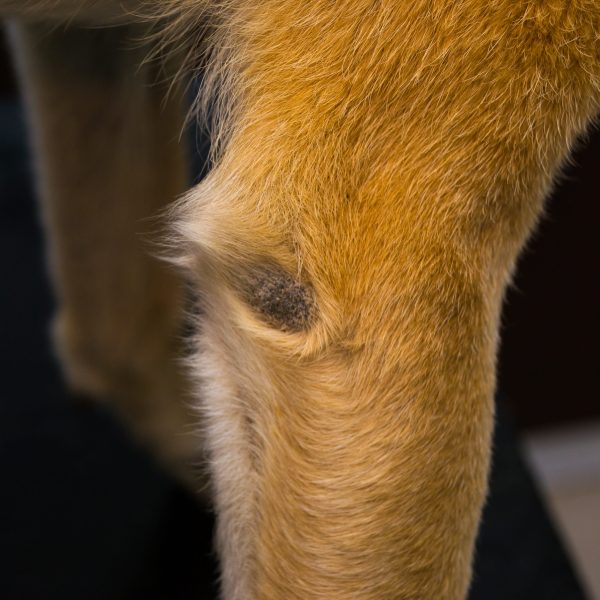
An elbow hygroma is a condition affecting the elbow joint that is experiencing pressure or damage. This condition affects large and giant dog breeds more than others, so it’s important to be aware of it if you have a large dog. So, what is an elbow hygroma in dogs? Here is what to know about elbow hygromas in dogs:
What is an Elbow Hygroma in Dogs?
An elbow hygroma in dogs is a fluid-filled sac or swelling that forms under the skin. These often occur in bony areas, like ankles and especially elbows. Hygromas usually do not cause pain unless they become infected.
When a hygroma first forms, it is usually soft, small, and moves around. They might even feel like lumps on dogs. Some hygromas never grow big enough to even be noticeable. If a hygroma grows larger, it might become hard to the touch. In some cases, they can become infected and cause pain.
What Causes Hygroma in a Dog’s Elbow?
If a dog develops an elbow hygroma, it’s usually due to trauma to the tissue around a bony area. The reason hygromas often occur in the elbow is that lying down on hard surfaces, like hardwood or concrete flooring, can cause inflammation in the tissue of the elbow. The body’s response is to protect this area by creating something similar to a pillow. If this damage continues, the hygroma continues to grow.
Hygromas tend to be more common in large-breed dogs and dogs that are more sedentary and spend most of their time lying down. This is because the more time a dog spends on the floor, the more pressure is applied to the joints that press into the floor, which can lead to hygromas.
Do Elbow Hygromas in Dogs Damage the Joint?
Elbow hygromas do not damage the joint directly. However, they can damage the soft tissue that surrounds the joint. Severe cases of hygromas can lead to infections, which can make them painful. Early intervention can help prevent damage to the tissue surrounding the joint.
How Are Elbow Hygromas in Dogs Diagnosed?
If you suspect your dog has an elbow hygroma, schedule an appointment with your veterinarian. They’ll perform a physical exam to determine if there are any hygromas forming. If they feel any fluid buildup around the joint, they will draw some fluid and test for signs of infection or tumor. Your veterinarian may also use imaging to diagnose an elbow hygroma.
How to Treat Elbow Hygroma in Dogs
If you have any reason to think your dog might have an elbow hygroma, you should try to choose a dog bed that has plenty of padding, like eggshell foam or memory foam. You can also try using foam tiles to cover hard floors where your dog likes to relax. Having plenty of padding on hard services can help prevent future trauma and may be the only thing necessary to keep the hygroma from growing.
However, if the hygroma continues to grow or becomes infected, it will need to be treated with antibiotics and may even require surgery to remove it. Surgery will not fix the underlying cause, so it’s important to make sure your dog has plenty of soft bedding and places to relax and rest afterwards. Your veterinarian can help develop a treatment plan after surgery to help prevent further hygromas from forming.
Prognosis of Elbow Hygromas in Dogs
Thankfully, with proper treatment, the prognosis for dogs with elbow hygromas is usually very good. As long as the underlying cause is addressed, small hygromas can disappear on their own. Making sure a dog has plenty of padded bedding and other areas can go a long way in treating hygromas.
If the hygroma gets too large or becomes infected, a dog’s prognosis will still be good, although it may require more intensive treatment. Recovery might take up to a month or two, depending on the severity of the case.
Can Elbow Hygromas in Dogs Be Prevented?
If you have a large or giant dog breed, it’s really important that you try to keep your dog from becoming overweight. This is important for any dog, but especially one of a larger size. Any extra weight on their frame can lead to extra pressure on their joints when they lie on the floor. If your dog is overweight, talk to your veterinarian to develop a plan to help them get on a treatment plan.
Even if your dog isn’t overweight, make sure they have plenty of soft bedding and soft areas to rest. This can go a long way in keeping their elbow joints protected and preventing hygroma from forming.
This is just an overview of elbow hygroma in dogs. If your dog develops a hygroma, treatment is usually not too intense, and your dog has a good prognosis. In the meantime, provide lots of soft bedding to help prevent hygromas from forming!