
What Does a Hard Stare in Dogs Mean?
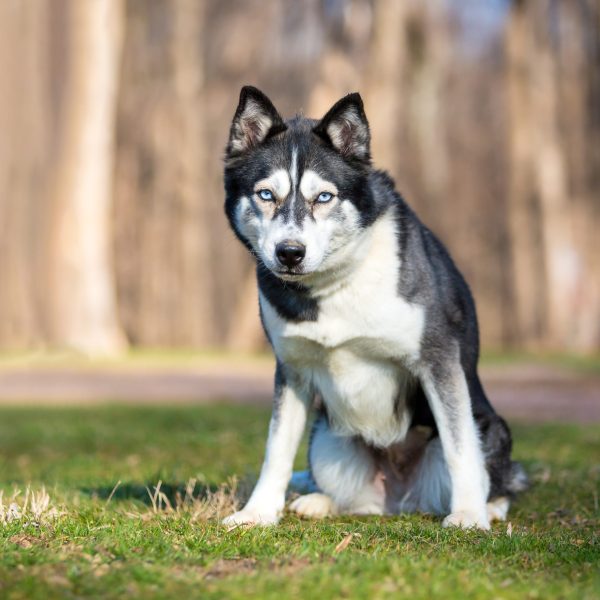
Have you ever noticed a dog all of a sudden notice something and stare intently at it without blinking? If so, you may have just seen a dog give a hard stare. This is a vital part of a dog’s communication, and it can mean a few things. What does a hard stare in dogs mean? Here’s what to know and what to do if a dog is giving you a hard stare:
What Does a Hard Stare in Dogs Look Like?
If a dog has a hard stare, they usually have their mouth closed with tight features on their face, and their ears may be angled forward or pinned back. Although not always, you may also see raised hackles.
You may notice that they also will not blink and will exhibit stiff body language. Their dog body language may indicate they are trying to gather more information about a certain situation or person.
What Does a Hard Stare in Dogs Mean?
Generally, a hard stare tends to be a warning sign for either another dog, human, or animal that they need to back off. It may also indicate that they are about to attack, or it can precede actions like barking or lunging.
When a dog has a hard stare, it means they are on alert and trying to gather more information about a situation. This is when the survival instinct part of their brain is starting to activate. This part of the brain is also responsible for guarding and responding to threats.
4 Reasons a Dog Might Be Giving a Hard Stare
It’s important to know that not every hard stare indicates that the dog is going to exhibit aggressive behavior. There are quite a few reasons a dog might be giving a hard stare.
- It may be due to a medical condition.
- It may indicate interest or curiosity.
- They might be in pain.
- They’re giving a warning sign.
1. It May Be Due to a Medical Condition
Vision problems are a common eye problem in dogs. If a dog has any vision loss, a hard stare might just mean they’re simply trying to discern what a blurry object is. They’re focusing so hard on something, and it looks like a hard stare.
They may also be experiencing canine cognitive dysfunction, a condition that is similar to dementia. Sometimes dogs exhibit a glazed-over look or blank expression while staring at something like the wall. This can look like a hard stare to some.
Other neurological issues, such as seizures or brain tumors, can cause unusual staring. Although not always, these can also be reasons why dogs stare at the wall. If you notice any of these behaviors, but your dog doesn’t seem stressed, or as if they’re responding to a threat or unusual situation, you may want to schedule a veterinarian visit.
2. It May Indicate Interest or Curiosity
If you notice that your dog is on alert and exhibiting a hard stare, they may be reacting to another dog or human. Sometimes, a dog can be so fixated on an item of food that they exhibit a hard stare simply because they want that item so badly.
3. They Might Be In Pain
Another reason a dog might be exhibiting a hard stare is that they are in pain and want someone to leave them alone. Other signs your dog is in pain include things like a tucked tail, stiff posture, or a low growl; you may want to consider that they are experiencing some pain.
4. They’re Giving a Warning Sign
If you experience a dog’s hard stare while petting them or approaching one of their possessions, like a toy or their food bowl, you should take that as a warning sign to immediately back off. In the case of food or possessions, or even their favorite people, they could be resource guarding, or they could just be issuing a warning.
If you are meeting a dog for the first time or one of your friends is meeting your dog for the first time, be sure to be aware of this hard stare. If you notice your dog or another dog exhibiting this behavior along with a closed mouth and stiffer body language, give the dog some space and avert your eyes. Sometimes dogs just need more time to warm up to someone, so give them plenty of space if possible.
What to Do If Your Dog is Giving a Hard Stare
If you notice your dog giving you a hard stare, there are a few things you should do to help them feel at ease. However, this will depend on the situation and what’s going on around your dog.
- Redirect your dog.
- Monitor your dog’s body language.
- Advocate for your dog.
- Learn more about how to communicate with your dog.
1. Redirect Your Dog
If possible, try to divert your dog’s attention. This is especially helpful if they are focusing on an animal further away or even an item of food that they might want. Working on improving your dog’s recall training can help them break their focus and potentially forget about the squirrel they saw or the piece of chicken they desperately want.
2. Monitor Your Dog’s Body Language
If your dog starts to give a hard stare while you are outside or on a walk, you may want to consider allowing your dog to continue to stare. As long as they’re not fixated on another person or animal within proximity, allowing your dog to gather more information about their surroundings can help your dog actually feel more confident.
However, you need to keep a close look at their body language and look for signs of nervousness or any indication they might start to react. Be ready to redirect them if they start to tense up further and escalate. Otherwise, let them investigate and recognize that whatever they are focused on is not a threat.
3. Advocate For Your Dog
You should also keep a close eye on a dog that is exhibiting a hard stare in a closed space, such as your home. If your dog starts to give a hard stare at a person, ask that person to stop doing whatever may be causing your dog to react.
Your dog might give a hard stare if someone is petting them and your dog is sensitive to touch. Asking them to back away from your dog allows your dog to get some space and feel less threatened.
4. Learn More About How to Communicate With Your Dog
It’s important to remember that a hard stare is your dog’s way of communicating how they feel to you, another dog, or another animal. Sometimes this means they need some space, they feel uncertain about the situation or person, or that they really just want to chase that squirrel outside.
If you feel like you’re having a hard time reading your dog’s body language and their hard stare, don’t be afraid to ask for help from your veterinarian or a dog behaviorist. Sometimes a third party can see things and help create training exercises to help your dog feel more confident in themselves.
What to Do If a Dog is Giving You a Hard Stare
If a dog, especially a dog you don’t know, is giving you a hard stare, it’s important to take notice of the warning, immediately show you are not a threat, and de-escalate the situation before something happens. Here are some tips for what to do if a dog is giving you a hard stare:
- Stop what you are doing. If a dog is giving you a hard stare as a reaction to something you are doing, stop and change your behavior. Do not continue unnecessarily and make them escalate.
- Do not run. If a dog is just staring and not actively coming towards you, you do not want to make yourself seem like prey or trigger their prey drive by tempting them to chase you.
- Look away by shifting your gaze to the side or turning your head.
- Avoid smiling so that you do not show your teeth or risk looking like a threat to a tense dog.
- Stay still and keep your posture calm and relaxed.
- Back up slowly and give space once the dog relaxes. Stay calm and move slowly. Do not turn your back on the dog or move in fast or jerky motions.
So what does a hard stare in dogs mean? It is often a warning, but it isn’t always. This is just one of the ways your dog tries to communicate with those around them. Learning what dog behaviors mean allows you to interact much more confidently with your dog!