
-
Activity Level:
high


-
Shedding Level:
moderate
-
Grooming Level:
moderate
-
Trainability:
high
-
Good for Novice Owners:
high
-
Adaptability:
moderate
-
Kid/Pet Friendly:
often
-
Prey Drive:
low
-
Watchdog:
aware
- Average Size: Large
- Average Lifespan: 10-12 years
- Registered?: other
Labernese Dog Breed Information
Overview
Temperament
Adaptability
Health
Owner Experience
Grooming
Activity Level
Size
Life Span
Did You Know?
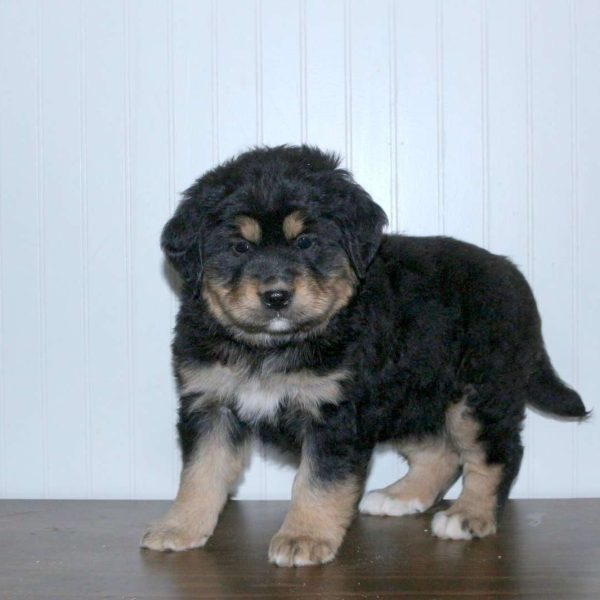
The Labernese is a cross between a Labrador Retriever and a Bernese Mountain Dog. Although there can be some variability among individual puppies, a Labernese tends to be a friendly, playful, and energetic dog that loves their family.
Although the Labernese is not currently recognized by the American Kennel Club, they are recognized by other notable dog registries and canine organizations. The American Canine Hybrid Club, International Designer Canine Registry, Dog Registry of America, and more all recognize the Labernese.
Labernese tend to be gentle giants with open and friendly personalities. These dogs tend to bond closely with their families and may bond even closer with a favorite person in the family.
They tend to be playful and energetic, and they can be excitable dogs. Despite their energy, they also tend to have a calm and gentle nature when well-socialized, which means they get along well with children, other dogs, and other pets. These are facts about Bernese Mountain Dogs and Labrador Retrievers that carry over into Labernese.
As long as they have been properly socialized, they even tend to be open and friendly with strangers. This means that although they may make great watchdogs, they do not tend to make good guard dogs, as they are usually far more interested in making friends. You will also want to work with your Labernese and train your dog to stop barking early on and keep it from becoming a nuisance.
The Labernese is a moderately adaptable dog breed. Due to their large size, they are best suited to larger homes with enough room for them to move around comfortably and fenced yards where they can run. They can adapt to apartment living if there is enough space for them, but you will have to dedicate a lot of time to daily exercise, mental stimulation, and attention.
These dogs do relatively well in most climates and tend to be particularly well-suited to cooler weather. Because they bond so closely with their families and are bored easily, they do not like to spend long periods of time alone. They can also be prone to developing separation anxiety if you do not work with them and socialize them early.
Although mixed dog breeds can sometimes be healthier than purebred dogs, it’s not a guarantee. Mixed-breed dogs can inherit some, none, or all of the conditions common to their parent breeds. Potential health concerns to be aware of in a Labernese can include hip dysplasia, elbow dysplasia, hypothyroidism, Progressive Retinal Atrophy, and von Willebrand’s disease. Good breeding practices and the health of the parents make a big difference in the health of Labernese puppies.
Reputable breeders will screen their dogs to avoid passing preventable issues to puppies. So, don’t be afraid to ask about the health and genetic history of both of the parents. You can also ask about any health tests and clearances that have been done.
As a large dog breed, the Labernese is at a higher risk for bloat. Bloat in dogs is serious. If the stomach flips (i.e., gastric torsion occurs), it quickly becomes fatal unless an emergency vet is able to intervene. It’s important to know how to reduce the risk and what to look for so you can get them to the vet as soon as possible if something is starting to happen.
This dog breed is also prone to gaining weight and can develop diabetes later in life if they have a poor diet and do not get enough exercise. As such, a proper diet, plenty of exercise, and regular vet visits are important for keeping this dog happy and healthy.
The Labernese is a highly trainable dog breed that tends to be a good fit for owners of all experience levels. Like their parent breeds, they are considered one of the best dog breeds for first-time owners, despite their higher energy. These dogs are intelligent, eager to please, and patient, which means they pick up quickly on training and strive to meet your expectations.
These are facts about Labrador Retrievers and Bernese Mountain Dogs that are also true for the Labernese. As a working dog with a lot of energy, they need a job to do and love to be occupied with work, even if that just means learning a new command or being your hiking buddy.
Because they pick up on things quickly, they can also get bored. So, don’t be afraid to teach them more complicated things after they’ve mastered the basic commands every dog should know. Otherwise, they’re likely to find a job for themselves, and it may not always be one that you want them to do.
The Labernese has a dense double coat that will shed moderately to heavily year-round, with heavier shedding sessions twice a year as seasons change. Brushing them a few times a week, along with the occasional bath, will be enough to keep this dog’s coat healthy and looking great. Daily brushing is even better, especially when the seasons change and your Labernese is shedding more heavily! Having the right types of dog grooming brushes will be a big help.
In addition to coat care, you will also need to care for your Labernese’s ears, nails, and teeth. Checking your dog’s ears weekly and carefully cleaning them as needed can help prevent ear infections. Once or twice monthly nail trimming is usually sufficient to keep your dog’s nails from growing too long. But if they’re not wearing down as much naturally, you may have to cut your dog’s nails more often.
Good dental care for dogs is also important to prevent painful dental diseases like gum disease, tooth decay, and tooth loss later in life. Gum disease is one of the most common health issues in dogs, and a lack of good dental care is usually why.
Brushing your dog’s teeth or using an enzyme toothpaste daily, in addition to cleanings at the vet when needed, is ideal for preventing the tartar and plaque buildup that leads to dental disease. Dental hygiene chews or treats and a special “dental care diet” can also help supplement your efforts. You can work with your vet to determine the best approach for your dog.
A Labernese can range from moderate to high energy. Daily walks, plus some playtime and time to run, should be sufficient for this dog. Because they enjoy being around you, they will likely be up for more activity if you are. You can try going hiking with your Labernese, playing frisbee, swimming with your dog, taking trips to the dog park, and more.
You may discover a new favorite activity that you both love. Just make sure puppies have finished growing and developing before you tackle higher-impact or more intense activities to avoid damaging their joints. Puppies finish growing at different rates. Large dogs tend to take longer, and individual dogs can vary. Your vet can help you determine age-appropriate activities for your Labernese puppy and will be able to clear them for more activities once they are done growing.
A fully-grown Labernese usually stands 21-28 inches tall at the shoulder and weighs 65-110 pounds.
Labernese generally live for 10-12 years on average.
The Labernese was originally bred to be a service dog that would be large enough to handle physical assistance. Although some of them still work as service or therapy dogs, they are also commonly found just being companions and beloved family pets.