
9 Fun Facts About the Havanese
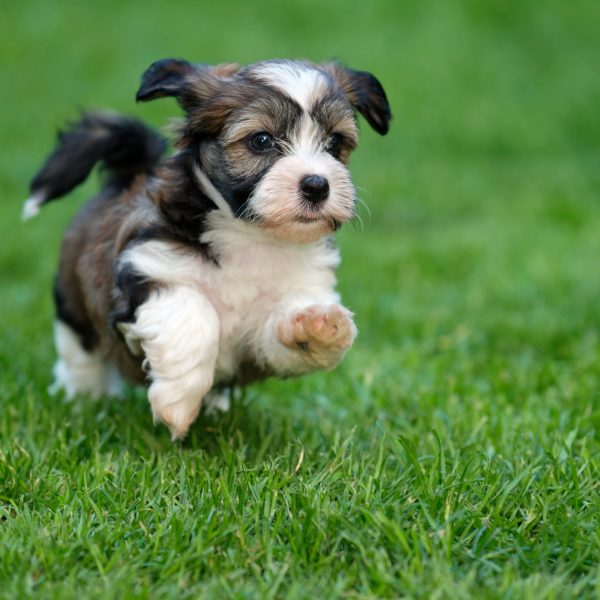
The Havanese is a unique dog with a unique history. Their adorable look, coupled with their compact size, has given them a special place in the hearts and minds of many. Here are some fun facts about the Havanese:
- The Havanese is an older toy breed.
- They’re named after the capital of Cuba.
- Havanese were traditionally given as gifts.
- European royals loved them.
- The Havanese usually loves to perform.
- There is a genetic variation for a short coat.
- Many celebrities have owned Havanese.
- They can be couch potatoes.
- Havanese are sensitive dogs.
1. The Havanese is an Older Toy Breed
Like the Bichon Frise, Maltese, and Bolognese dog breeds, the Havanese is considered a Barbichon breed type. This group is composed of these similar little white companion dogs in the Bichon family with long histories. They are considered ancient dog breeds because they can be traced back through centuries. Modern versions of the breed include coat color variations and patterns.
2. They’re Named After the Capital of Cuba
The name Havanese is derived from Cuba’s capital city, Havana. The breed descended from dogs that were found in Cuba and is considered the only native breed of Cuba. In the early days, the breed was quite popular among wealthy Cubans.
Due to the Cuban Revolution and the people’s revolt against the elite, the breed nearly became extinct in the 1950s. A breeding program began in the middle of the 1960s when some of the exiled families in Costa Rica and Florida managed to rescue the Havanese from the carnage of the uprising.
Even though the breed almost went extinct, it is now a common dog breed and a popular family companion. In modern times, the Havanese is almost as prevalent as any other small dog breed, even though they may not necessarily be one of the most popular toy breeds.
3. Havanese Were Traditionally Given as Gifts
Cubans bred Havanese dogs to be given as gifts. Originally, they were never bred for individual or commercial purposes. Their purpose was to be given as gifts to other well-to-do Cubans. In Cuba, a Havanese symbolized the commitment to serious social interactions. They were even often included in business deals.
This is one of the main reasons that Havanese were not dogs you saw while out on the street. The exception to this was ports around the world, where lively, lovable, and clever lapdogs, like the Havanese and their ancestors, were valuable for bartering or trade among seafaring merchants.
4. European Royals Loved Them
European royalty used the Havanese in their palaces as entertainment dogs. They could often be found performing tricks and entertaining guests with their playful, spritely demeanor and sense of humor. In fact, Queen Victoria of England owned two Havanese in the mid-18th century.
They also have a very attached personality, so they often became instant friends with family and strangers alike. This made them a fantastic companion dog and is why they were often given as gifts. Havanese were usually given Poodle-style cuts to symbolize their nobility and give them a royal, regal appearance.
5. The Havanese Usually Loves to Perform
Havanese love attention and thrive on it. This, paired with their playful personalities and lively demeanors, makes them natural performers. It’s no surprise these dogs were used for entertainment in royal courts and have even performed in circuses in the past.
They are intelligent, little dogs that are eager to please and pick up on things quickly. They usually love learning new tricks and generally love performing them, especially when they get rewarded with so much positive attention and praise. Once your Havanese masters basic commands, don’t be afraid to try other tricks to teach your dog. They’ll love learning something new, and you might end up surprised at everything they can do.
6. There is a Genetic Variation For a Short Coat
Although the Havanese is a long-haired dog, there will be the occasional short-haired Havanese in a litter every now and then. This is not a new or rare breed. It’s simply a Havanese that happened to get a genetic variation for a short coat instead of the standard long one.
As with any Havanese, they still make fantastic family pets. However, a short-haired Havanese is not considered acceptable for show ring competitions or for breeding according to Havanese breed standards.
It is important to be cautious of any dog breeder who is trying to sell a short-haired Havanese as a new or rare breed. Some breeders may call one of these dogs a “Shavanese”, but they will also be upfront about it being a short-haired Havanese that is not up to recognized breed standards.
7. Many Celebrities Have Owned Havanese
It makes sense that a dog bred to be a companion to royals and the wealthy would find themselves adored by the modern aristocracy and celebrities. Notable pet parents of Havanese pups include Venus Williams, Joan Rivers, Queen Anne, Barbara Walters, Ernest Hemingway, Charles Dickens, and more.
8. They Can Be Couch Potatoes
The Havanese were bred to be royal lapdogs and noble companions, and that is an attitude they carry into modern day. These little dogs were made for lounging and cuddling, while looking regal. Although they may be energetic when they play and do have playful personalities, they usually prefer to relax with their favorite people. This can make them seem like one of the laziest dog breeds.
And, if they don’t feel like being active, you may have a hard time convincing them when they are determined to be a couch potato. At the same time, they tend to be Velcro dogs and prefer being near you. So, if the choice is to be with you and be active or be alone and relax, they may be more likely to choose being active with you to stay nearby. Just be aware that, depending on the dog, your Havanese may try to make you carry them instead of walking on their own while you’re out and about with them.
9. Havanese Are Sensitive Dogs
Havanese bond closely with their families and tend to be sensitive dogs. They can be particularly sensitive to tones of voice to the point that harsh tones or corrections during training can damage the bond you are building with them.
They respond best to gentle, consistent, and patient training. These dogs are intelligent, easy to train, and eager to please. They thrive on attention, so positive praise and reward are usually all a Havanese needs to continue to strive to excel at training and exceed your expectations.
Is a Havanese Puppy Right For You?
These are just a few fun facts about the Havanese. A Havanese can be a great fit for families or for single owners who can give them the attention they crave as an involved and valued member of the family.
If you think this compact, noble dog could be the right fit for you, learn more about the breed, and then check out the available Havanese puppies. Who knows? You could end up finding your new best friend!