
What to Know About Water Intoxication in Dogs
Hydration is important for everyone, and it’s important for your dog, too. Dogs need plenty of fresh and clean water, but is it possible they can have too much water? Here’s what to know about water intoxication in dogs:
What is Water Intoxication in Dogs?
Water intoxication in dogs can also be called water toxemia, water poisoning, or even hyperhydration. This happens when a dog swallows way too much water in too short a time. When a dog takes in too much water too quickly, the body cannot process it fast enough, and it dilutes the sodium in the bloodstream.
Water intoxication occurs when sodium levels dip so low that it becomes hyponatremia. Essentially, there is too much water in the body relative to sodium, which dilutes electrolytes too much, causes a misbalance, and leads to cells swelling.
As the body tries to rebalance, it responds to these low sodium levels by increasing the fluid intake inside the organs. Some organs can adjust to those swelling cells, but other organs, such as the brain, cannot. Because the brain is encased in the skull, which is bone, it cannot swell much without causing injury. While all breeds can be at risk for water intoxication, toy or small dogs have a higher risk due to their smaller body size. It takes less water for their system to get out of balance, and their bodies don’t have as much space and capacity to process it.
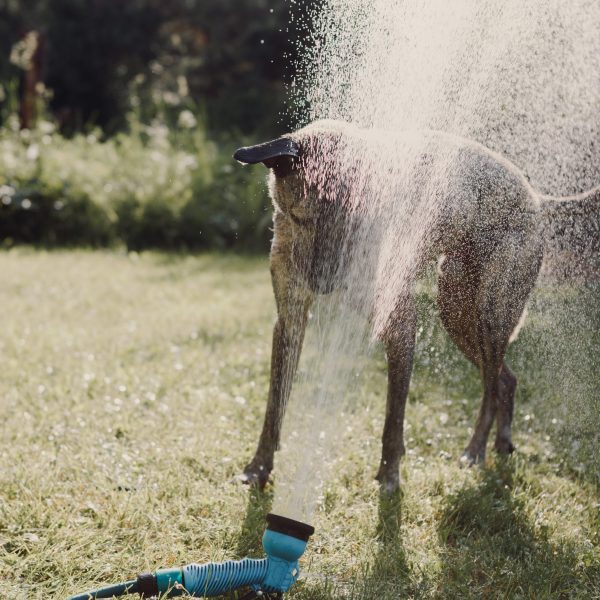
In humans, water intoxication can be the result of drinking too much water too quickly after strenuous exercise. However, water intoxication in dogs is most likely to happen if a dog is swimming or spending time in bodies of water because of how they swim, retrieving toys in water, and how easily water enters their mouth. If your dog likes to jump into lakes or do activities like dock diving, they may be at risk for water intoxication. Dogs who enjoy playing with and biting at water from a hose or high-pressure sprinklers can also be at risk if you’re not cautious.
Signs of Water Intoxication in Dogs
If your dog has water intoxication, there are some signs to be aware of. Here are a few signs of water intoxication in dogs, many of which are symptoms you should never ignore in your dog:
- Pale gums
- Lethargy
- Bloating
- Dilated pupils
- Vomiting
- Restlessness
- Trouble walking or a loss of coordination
- Excessive or sudden drooling
- Glazed eyes
You may see some of these signs and symptoms if your dog is drinking more water than usual. If a dog develops water intoxication and the pressure in the brain increases too much, cells may begin to die off. If this happens, they may have problems breathing, experience seizures, or even go into a coma.
How to Treat Water Intoxication in Dogs
If you have any reason to suspect that your dog might be experiencing water intoxication, either get to your veterinarian or an emergency veterinarian clinic as soon as you possibly can. Water intoxication means the dog doesn’t have enough sodium in their body, and stabilizing those levels is crucial for recovery.
Blood Tests or Other Lab Work Should Be Done
Because water intoxication has not been part of enough veterinary literature, it can sometimes be wrongly diagnosed as either overexertion or hypothermia. If your dog is exhibiting signs of water intoxication, and your veterinarian isn’t running a blood test or other lab work, ask for these tests to be done. One of the best ways to know for sure if it’s water intoxication is to check the blood sodium levels.
Electrolytes to Stabilize Sodium Levels
Treating water intoxication in dogs typically involves administering electrolytes to help stabilize sodium levels.
However, you can’t just give your dog a Gatorade and hope for the best. Human sports drinks are generally not safe for dogs and are likely to harm them, either by upsetting their stomach and causing them to lose even more electrolytes, overdosing on electrolytes and potassium, or by introducing xylitol, which is toxic to dogs.
Administering electrolytes needs to be done by a veterinarian for appropriate dosage and monitoring. Too many electrolytes may cause neurological problems.
Diuretics to Decrease Pressure
Veterinarians may also use drugs to decrease excess pressure in the brain. Diuretics, like Lasix, can help the body remove extra fluid more quickly.
Extreme Cases Can Be Fatal
In mild cases of water intoxication, a dog might have a slightly staggering walk, but they typically recover their equilibrium and can walk as normal. In more severe cases, the brain may become too damaged and cannot be reversed. In these extreme cases, the dog may need to be euthanized or will die naturally.
How Common is Water Intoxication in Dogs?
Thankfully, water intoxication in dogs is quite rare. The problem is that symptoms show up quite fast, and fatalities occur sometimes before you even realize what’s wrong.
How Much Water Causes Water Intoxication in Dogs?
The amount of water that causes water intoxication in dogs depends a lot on a dog’s body weight. There is no specific volume of water that is considered lethal, but consuming 90-95 milliliters of water per kilogram of a dog’s body weight is a typical threshold of toxicity. For example, if your dog weighs around 30 kg (or about 66 lbs), the amount of water that becomes toxic is about 2.7-2.9 liters.
How Quickly Does Water Intoxication Happen in Dogs?
Water intoxication develops almost immediately, with symptoms appearing within 10 to 60 minutes. You may see a loss of coordination or lethargy within minutes of the water activity. If these symptoms are not treated, the dog will go into severe neurological distress.
This often includes seizures, collapsing, and labored breathing. They may even go into a coma. If symptoms remain untreated, water intoxication can be fatal. Small dogs can pass away within four hours, while fatality in larger dogs happens within 7 to 8 hours.
How Long Does Water Intoxication Last in Dogs?
Water intoxication in dogs constitutes a medical emergency. If untreated, this condition can last a few hours and end in fatality. With veterinary intervention, it can last up to three days as your dog recovers. How long water intoxication lasts depends on how severe the brain’s swelling is and how quickly the electrolyte balance can be restored in the dog.
With prompt intervention, mild cases of water intoxication can typically improve within 24 hours with proper electrolyte monitoring. In more severe cases that require IV fluids, brain swelling, medication, and diuretics, hospitalization may be necessary for a day or two. Even after electrolytes have been properly balanced, there still may be some neurological symptoms that linger for a few days. In more severe cases, there may be permanent neurological damage.
How to Prevent Water Intoxication in Dogs
Although it is rare, you still want to take measures to help reduce risk and avoid water intoxication. Here’s how to prevent water intoxication in dogs:
- Supervise your dog in the water.
- Be careful with water retrieval.
- Be aware of how your dog drinks from a hose.
1. Supervise Your Dog in the Water
Since water intoxication is nearly irreversible in some cases, it’s vital to supervise your dog during any water play or when swimming with your dog. Be careful to observe how your dog swims in the water.
If they splash a lot and hold their head low to the water with an open mouth, they can be at greater risk for water intoxication. If you have a small dog, a senior dog, or any dog that’s nervous in water, use a life vest. You should also use a life vest on any dog in open water.
2. Be Careful With Water Retrieval
Do not let your dog swim or retrieve any objects in water without supervision, and make sure they take plenty of breaks. Make sure they have plenty of opportunities to relieve themselves because this can help remove any excess water intake.
If your dog loves to play fetch in the water, don’t use tennis balls or any toy that is round. Rather, look for a flat object, like a disc. This allows your dog to close their mouth around it quickly. Your dog should also not dive underwater for objects. Look for toys that float so they’re not tempted to dive.
3. Be Aware of How Your Dog Drinks From a Hose
You should also avoid letting your dog drink from the hose, especially at full blast. Staying hydrated in warm weather is a really important summer safety tip for dogs, but make sure you keep a clean bowl nearby for them to drink out of rather than drinking from a hose.
Or, if they are drinking from the hose, make sure they are lapping up water from the side instead of getting a stream directly into their mouth. This will help slow down and regulate their water intake to help keep it at a normal rate.
This is just an overview of what to know about water intoxication in dogs. If left untreated, water intoxication can have serious, and sometimes fatal, consequences for your dog. Like bloat in dogs, it’s really important to be able to recognize the symptoms so you can get your dog treatment quickly and give them the best chance at recovery.