
-
Activity Level:
moderate


-
Shedding Level:
moderate
-
Grooming Level:
low
-
Trainability:
high
-
Good for Novice Owners:
high
-
Adaptability:
moderate
-
Kid/Pet Friendly:
often
-
Prey Drive:
high
-
Watchdog:
very alert
- Average Size: Small
- Average Lifespan: 12-15 years
- Registered?: other
Jug Dog Breed Information
Overview
Temperament
Adaptability
Health
Owner Experience
Grooming
Activity Level
Size
Life Span
Did You Know?
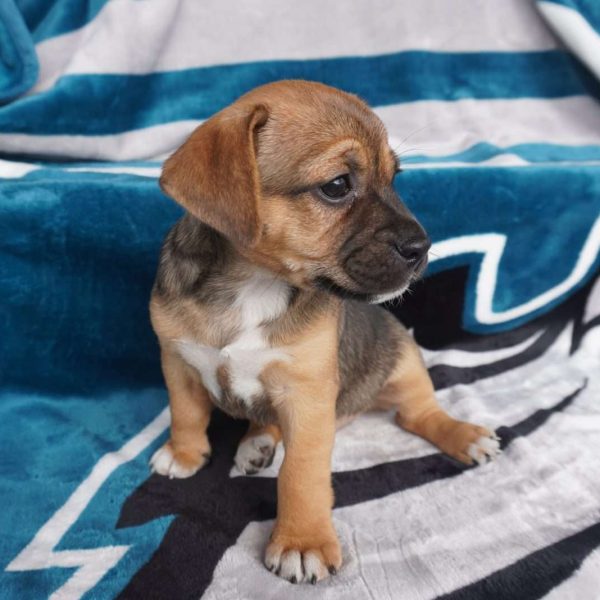
A Jug is a cross between a Jack Russell Terrier and a Pug. In addition to the best characteristics from each parent breed, a Jug should also have a slightly longer nose to help alleviate the breathing problems common to snub-nosed breeds like the Pug. Overall, these dogs tend to be playful and affectionate with a lot of personality.
Although the Jug is not recognized by the American Kennel Club, they are recognized by other notable canine organizations and dog registries. The American Canine Hybrid Club, Designer Dog Kennel Club, Dog Registry of America, and International Designer Canine Registry all recognize the Jug.
Jugs are affectionate, playful, and charming dogs that love their families. They tend to get along well with children and other dogs. They can inherit the high prey drive from their terrier parent, which can require extra socialization with other small pets in the household.
They will be alert watchdogs and can be prone to barking a lot. Both of the parent breeds are vocal dogs, and this is a fact about Jack Russell Terriers that also tends to be true for Jugs. They can also be protective, but will warm up to strangers once introduced, as long as they have been appropriately socialized.
Although these dogs will bark to alert you, training your dog to stop barking early on can help keep them from barking at everything and keep it from becoming a nuisance behavior. You may even be able to train them to respond to a cue to stop barking as a way to acknowledge the alert and then redirect their attention to something else.
A Jug is a moderately adaptable dog. Although they can adapt well to larger homes as well as apartments, they are sensitive to weather and temperature changes. As a brachycephalic breed, they are very sensitive to heat.
This is a fact about Pugs that also still tends to be true for Jugs. You will need to be careful when the temperatures rise in the summer. Their short coat and big eyes also make them sensitive to the cold, so you will likely need to get some winter dog products to help your Jug feel more comfortable out on walks with you when the temperature drops.
These dogs also bond closely with their families and thrive on attention and affection from them. As such, they do not like to be left alone for long periods of time. This can also make them prone to developing separation anxiety if you do not work with them on this early on and often.
Mixed-breed dogs can sometimes be healthier than purebred dogs, but it’s not a guarantee. Potential health concerns to be aware of in a Jug can include skin conditions, luxating patella, cherry eye, and respiratory disorders.
Good breeding practices and the health of the parents make a big difference in the health of Jug puppies. Reputable breeders will screen their dogs to avoid passing preventable issues to puppies, so make sure you are asking about the health and genetic history of both of the parents. You can also ask about any health tests or clearances that have been done.
Like their parents, Jugs can also be prone to developing seasonal allergies. They are also still a brachycephalic dog breed, so they can still be prone to breathing problems, especially in the heat. As a small dog breed, they are also more prone to developing dental disease later in life. Gum disease in dogs is one of the most common health problems in dogs, and it can lead to other serious health problems. This makes good dental care early and consistently throughout your Jug’s life an even bigger priority.
A Jug is an intelligent dog that picks up on things quickly and is generally eager to please. They can sometimes be stubborn if they inherit a stubborn streak from their Jack Russell parent. But overall, they tend to be highly trainable dogs that are a good fit for owners of all levels.
As a first-time owner, it’s not a bad idea to be prepared to enroll in obedience classes. There are several benefits of puppy training classes, so they tend to be a good idea even if you don’t necessarily need them.
A Jug tends to have a short coat that will shed moderately year-round. Weekly brushing, or brushing a few times a week with the occasional bath as needed, is usually enough to keep a Jug coat healthy and looking great.
In addition to coat care, you also need to take care of your Jug’s nails, ears, eyes, and teeth. Cutting your dog’s nails once or twice a month is usually sufficient to keep them from growing too long and causing issues. Weekly ear checks with careful ear cleanings as needed can help prevent ear infections.
A Jug’s big, protruding eyes are cute, but can attract dust and dirt and become irritated, so you do want to check them regularly and wipe around their eyes as needed to keep them clear. If they have wrinkles on their face, you will want to check and clean those regularly as well. Daily dental care, plus cleanings at the vet as needed, is essential for preventing painful dental diseases later in life.
A Jug is a small dog with moderate exercise requirements. Although they will be energetic when they play and may have bouts of higher energy, they are not high-energy dogs. Daily walks, plus some playtime throughout the day, are usually enough to keep this dog happy and healthy.
These dogs can be active and athletic, but you do need to keep an eye on them to make sure they are not overheating. Taking breaks and distributing exercise into short bursts throughout the day are some safe ways to exercise flat-faced dogs.
A fully-grown Jug usually stands 10-15 inches tall and weighs 11-20 pounds. This makes them one of the smallest dog breeds.
Jugs generally live for 12-15 years on average.
Although this breed is most commonly called a Jug, they are sometimes also referred to as a Jack-Pug, a Jack Russell Pug, or a Pug Russell.