
-
Activity Level:
moderate


-
Shedding Level:
low
-
Grooming Level:
high
-
Trainability:
high
-
Good for Novice Owners:
high
-
Adaptability:
high
-
Kid/Pet Friendly:
often
-
Prey Drive:
low
-
Watchdog:
very alert
- Average Size: Small
- Average Lifespan: 12-16 years
- Registered?: other
Lhasa-Chon Dog Breed Information
Overview
Temperament
Adaptability
Health
Owner Experience
Grooming
Activity Level
Size
Life Span
Did You Know?
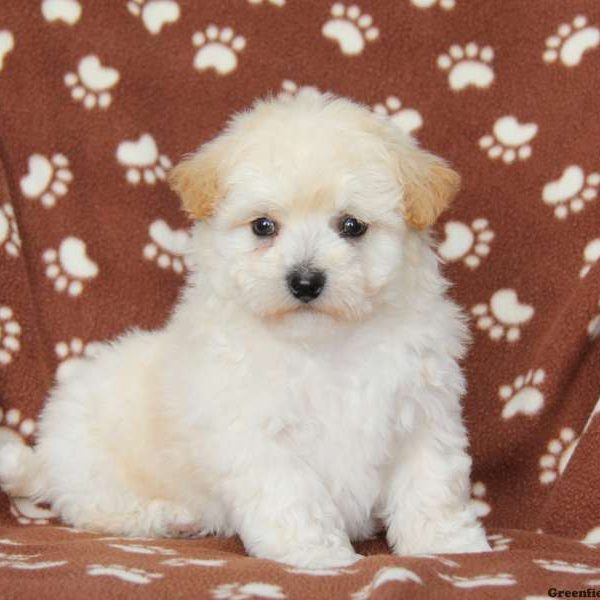
A Lhasa-Chon is a hybrid dog breed that is a cross between a Lhasa Apso and a Bichon Frise. They are also often called a La-Chon. A mixed breed can take on any combination of traits from their parent breeds. Overall, Lhasa-Chon tend to have happy dispositions and friendly personalities.
They tend to be small social dogs that love their families and make great house pets. Although the Lhasa-Chon is not recognized by the American Kennel Club, they are recognized by other notable dog organizations and registries, like the American Canine Hybrid Club, Designer Dogs Kennel Club, and more.
La-Chon are fiercely loyal to their families and are affectionate. They thrive on attention and affection, so they love to spend time with their families and tend to bond closely with them. Being a quintessential companion dog is a fact about the Bichon Frise that is also true for a Lhasa-Chon. Well-socialized, these little dogs tend to get along well with children, other dogs, and other pets.
But they can be prone to “small dog syndrome” if they are allowed to be spoiled or are not socialized or trained properly. They tend to make great watchdogs, but their small size and friendly nature mean they don’t make good guard dogs. They can be prone to barking a lot if you do not work with them on it early on. Socializing your dog well and training your dog to stop barking can help keep barking limited to alerts and less of a nuisance.
Despite their small size, the La-Chon is a highly adaptable dog breed. They do well in apartments as well as in larger homes and do well in most climates. Due to their small size, they may need some help staying warm in the winter.
So, it’s usually a good idea to stock up on some good winter dog products to help them bundle up and stay warm while out on walks when the temperatures drop. Because Lhasa-Chon bond so closely to their humans, they do not like to be left alone for long periods of time.
As a mixed dog breed, the Lhasa-Chon can inherit the health conditions common to one, both, or neither of the parent breeds. Potential health concerns for this dog breed can include hip dysplasia, luxating patella, allergies, skin problems, and kidney problems. Good breeding practices and the health of the parents make a big difference in the health of La-Chon puppies.
Reputable breeders will screen their dogs to avoid passing preventable issues to puppies. So, make sure you ask the breeder about the genetic history of both parents. You can also ask to see any relevant health clearances or test results.
Both of the parent breeds are eager to please, highly intelligent, and easy to train. The same should be true for your Lhasa-Chon. These traits make this designer dog breed highly trainable and a great fit for dog owners of all experience levels.
One of the facts about the Lhasa Apso that can also be true for a La-Chon is that they can have a stubborn streak, so first-time owners may want to consider training classes. Puppy training and obedience classes are still a great option even if you don’t necessarily need them for training, as they tend to help you strengthen your bond with your puppy and also provide an opportunity to socialize a puppy.
With some of the fluffiest dog breeds as parents, a Lhasa-Chon tends to have a medium-length coat that can be wavy or smooth. Although they do not tend to shed much, their coat does require quite a bit of grooming to stay healthy. Their coat is prone to tangling and matting, so you will need to brush their coat a few times a week at least and take them for professional grooming every 2-3 months. Bathing is on an as-needed basis, so you may need to give your dog a bath in between professional grooming sessions if they need it.
In addition to coat care, you will need to handle nail, ear, and dental care for your Lhasa-Chon. Cutting your dog’s nails once or twice monthly is usually enough to keep them from growing too long. Checking ears weekly and carefully cleaning them as needed can help prevent ear infections. Brushing their teeth or using an enzyme toothpaste every day, in addition to cleanings at the vet when needed, is ideal for preventing painful dental diseases like gum disease and tooth decay.
Although they are small, these dogs are energetic. They may not be a high-energy dog breed, but they do require a moderate amount of activity every day to stay happy and healthy. Daily walks, plus some playtime, are usually enough for a Lhasa-Chon.
But they love spending time with you, so they may be up for more activity if you are. Try taking trips to the dog park, going on a hike, or even going swimming with your dog – just keep an eye on them to make sure they aren’t overexerting themselves trying to keep up. Also, make sure you are keeping activities low-impact until puppies finish growing and their bones and joints finish developing.
A fully-grown La-Chon usually stands 10-18 inches tall and weighs 8-20 pounds.
A Lhasa-Chon generally lives for 12-16 years on average.
La-Chon are quintessential lapdogs; these little dogs love to cuddle, especially with their favorite humans.